

Vietnam is a fascinating destination known for its rich history, vibrant street life, delicious cuisine, and warm hospitality. However, understanding local customs and etiquette can significantly improve your travel experience and help you connect respectfully with Vietnamese people.
Whether you are planning a vacation, business trip, or long-term stay, this guide covers the essential Vietnam customs and etiquette every traveler should know.
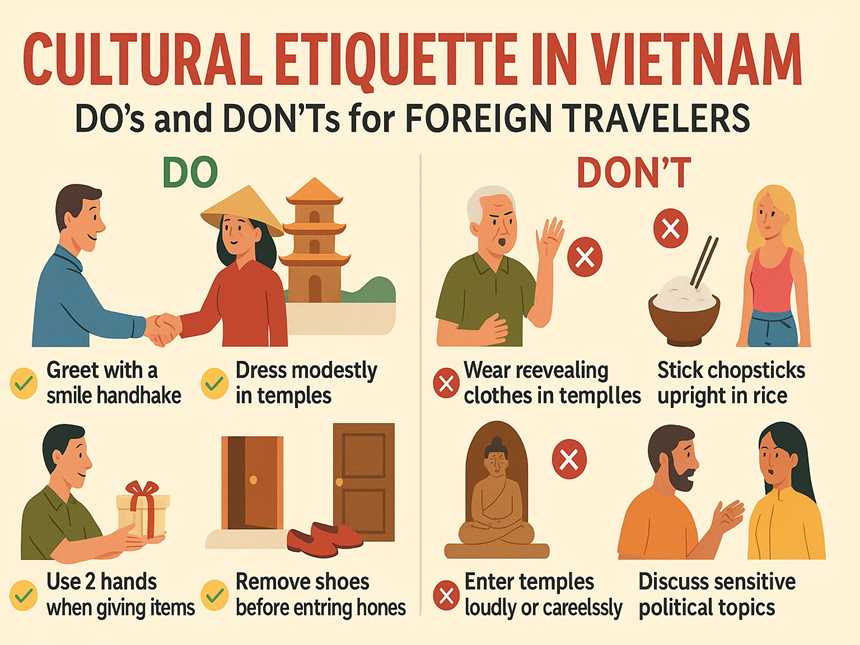
Why Understanding Vietnam Customs Matters
Vietnamese culture is deeply influenced by Confucianism, Buddhism, and strong family values. Respect, politeness, and humility are highly appreciated in daily interactions.
By following local etiquette, visitors can:
- Show cultural respect
- Avoid unintentional offense
- Build better relationships with locals
- Enjoy a more authentic travel experience
Greetings and Social Etiquette in Vietnam
1. How Vietnamese People Greet Each Other
In Vietnam, greetings are generally polite and reserved.
Common practices include:
- A slight nod or smile
- Handshakes in formal settings
- Using both hands when giving or receiving items
Unlike Western cultures, hugging or kissing when meeting someone is uncommon, especially with strangers.
Pro Tip:
When greeting older people, show extra respect by slightly bowing your head.
2. Respect for Elders Is Very Important
Vietnamese society strongly values age hierarchy.
You should:
- Greet elders first
- Offer seats to older people
- Avoid interrupting seniors during conversations
Showing respect toward elders is considered a sign of good character.
Dining Etiquette in Vietnam
Food plays a central role in Vietnamese culture, and meals are often shared communally.
3. Wait Before Eating
At family meals or formal gatherings, wait for the eldest person to begin eating before starting your meal.
This simple gesture demonstrates politeness and respect.
4. Chopstick Rules You Should Know
When dining in Vietnam:
Avoid:
- Sticking chopsticks vertically into rice bowls
- Pointing chopsticks at people
- Playing with utensils
Placing chopsticks upright in rice resembles incense offerings for the deceased and is considered bad luck.
5. Sharing Food Is Common
Vietnamese meals are typically shared among everyone at the table.
It is polite to:
- Take moderate portions
- Offer food to others
- Try different dishes
Refusing food repeatedly may appear impolite.
Temple and Religious Etiquette
Vietnam has many pagodas, temples, and sacred sites. Respectful behavior is expected.
6. Dress Modestly
When visiting temples or pagodas:
- Cover shoulders and knees
- Remove hats and sunglasses
- Wear clean and respectful clothing
Avoid overly revealing outfits.
7. Keep Your Voice Low
Religious sites are peaceful places for worship and meditation.
Visitors should:
- Speak quietly
- Avoid running or loud laughter
- Ask permission before taking photos of monks or worshippers
Everyday Etiquette in Vietnam
8. Remove Shoes When Necessary
In many Vietnamese homes and some businesses, removing shoes before entering is customary.
Look for:
- Shoes placed outside the entrance
- Indoor slippers provided by hosts
When unsure, observe what locals are doing.
9. Public Displays of Affection Are Limited
While younger generations are becoming more open-minded, excessive public affection is still uncommon in Vietnam.
Holding hands is generally acceptable, but overly intimate behavior may attract unwanted attention.
10. Saving Face Is Important
The concept of “saving face” is deeply rooted in Vietnamese culture.
Avoid:
- Public criticism
- Raising your voice
- Causing embarrassment
Maintaining calm and politeness helps preserve harmony in social situations.
Business Etiquette in Vietnam
For business travelers, professionalism and respect are highly valued.
11. Business Card Etiquette
When exchanging business cards:
- Use both hands
- Take a moment to read the card
- Avoid putting it immediately into your pocket
This demonstrates professionalism and courtesy.
12. Punctuality Matters
Although traffic in Vietnam can be unpredictable, arriving on time for meetings is important.
For formal meetings:
- Dress conservatively
- Address people respectfully
- Maintain polite communication
Important Things Tourists Should Avoid
To ensure respectful travel in Vietnam, avoid these common mistakes:
- Touching someone’s head
- Pointing feet at people or sacred objects
- Speaking negatively about politics or sensitive historical topics
- Losing your temper in public
- Wearing revealing clothes at religious sites
Cultural awareness can help create positive interactions throughout your trip.
Useful Vietnamese Phrases for Travelers
Learning a few local phrases is always appreciated.
| English | Vietnamese |
|---|---|
| Hello | Xin chào |
| Thank you | Cảm ơn |
| Sorry | Xin lỗi |
| Yes | Vâng / Dạ |
| No | Không |
Even basic effort can make locals more welcoming and friendly.
Final Thoughts on Vietnam Customs & Etiquette
Vietnam is a welcoming and culturally rich country where respect and politeness go a long way. Understanding Vietnam customs and etiquette not only helps you avoid cultural misunderstandings but also allows you to experience deeper connections with local people.
By following simple cultural practices from dining manners to temple behavior you can travel confidently and respectfully while enjoying everything Vietnam has to offer.
FAQ About Vietnam Customs & Etiquette
Is tipping customary in Vietnam?
Tipping is appreciated but not mandatory. In tourist areas, small tips for guides, drivers, and restaurant staff are common.
Can tourists wear shorts in Vietnam?
Yes, especially in casual or beach areas. However, modest clothing is recommended when visiting temples and religious sites.
Is bargaining acceptable in Vietnam?
Yes, bargaining is common in local markets, but it should be done politely and respectfully.
What is considered rude in Vietnam?
Public anger, disrespect toward elders, and inappropriate behavior at religious sites are generally considered rude.
Do Vietnamese people speak English?
English is commonly spoken in major cities and tourist areas, especially among younger people and hospitality staff.
✈️ Let’s Plan Your Vietnam Journey
Every trip starts with an idea. We’re here to turn that idea into a seamless and unforgettable experience.
Tell us what you’re looking for - and we’ll design a Vietnam tour that feels truly yours.
👉 Start planning your Vietnam trip with VietAsia Travel today.